The State and Outlook for Nuclear Generation
Explore the future of U.S. nuclear energy and how shifting policies, next-generation technologies like SMRs and microreactors, and global competitiveness are shaping the nuclear landscape.
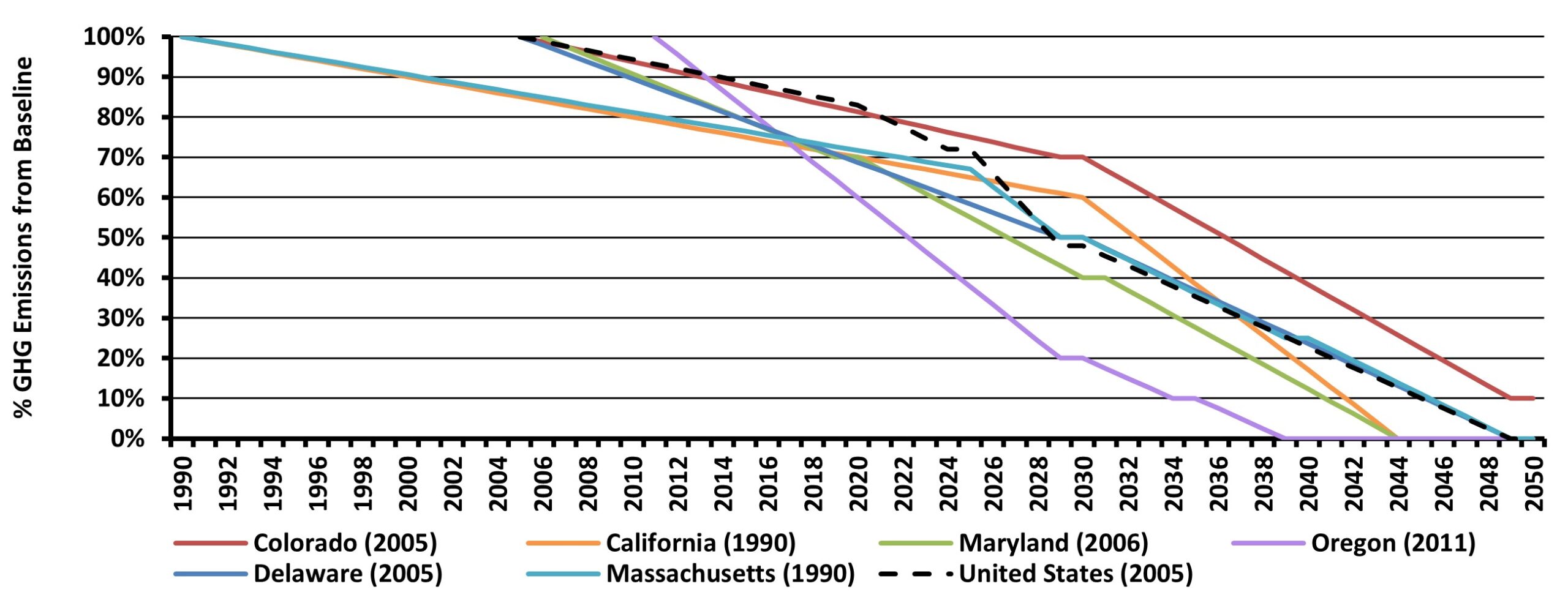
Figure 1 below shows leading state and federal CO2 targets, with California, Colorado, Massachusetts, and Maryland undertaking some of the most comprehensive climate action plans, driven by state policy.
Electrification is one of the most important strategies for reducing carbon emissions in the future, as it assists in transitioning away from fossil fuels across a range of sectors, including residential, commercial, industry and transport. Understanding the opportunities and challenges related to electrification is key to ensuring that policies supporting electrification are effective, and workforce development is increasingly at the top of this list.
Energeia’s analysis of workforce related issues and best practices is broken down into a workforce impact assessment, which assesses the change in workforce requirements over time due to multi-sector electrification, and workforce solution development, which captures the solutions available to meet the workforce needs.
The following sections provide examples of workforce requirements analysis we have completed across key decarbonization pathways, and highlight the associated key methods, issues and insights:
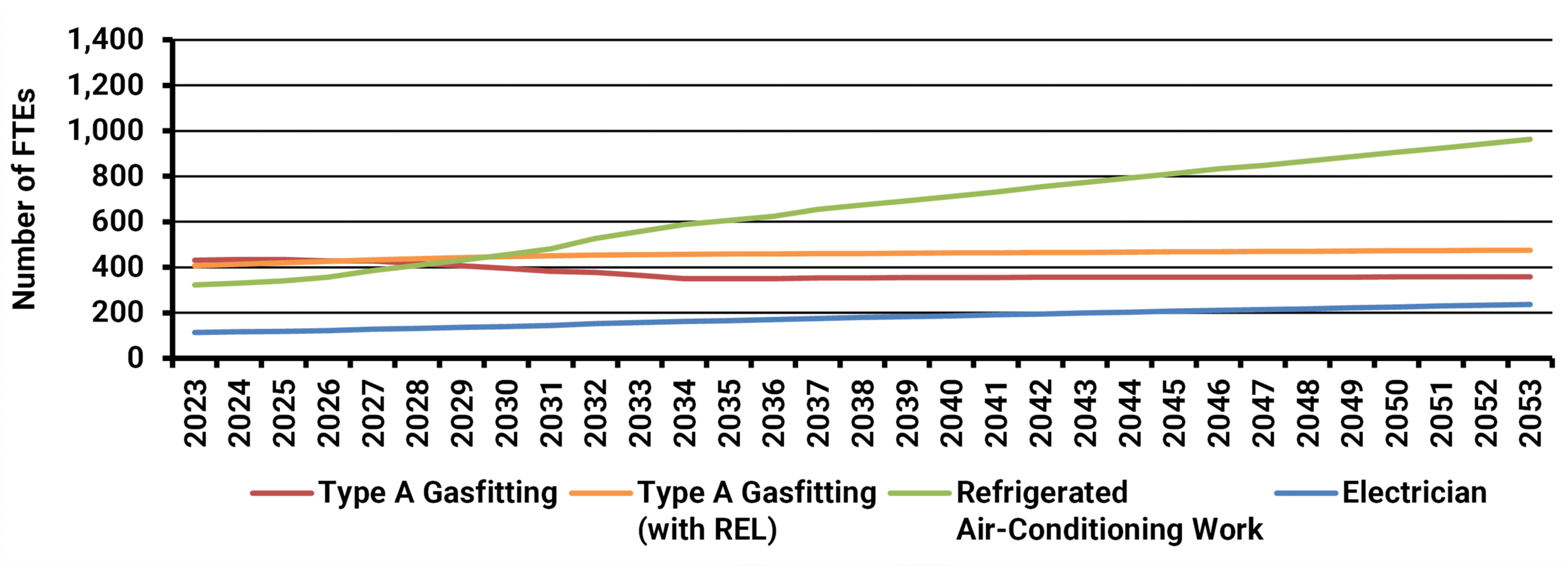
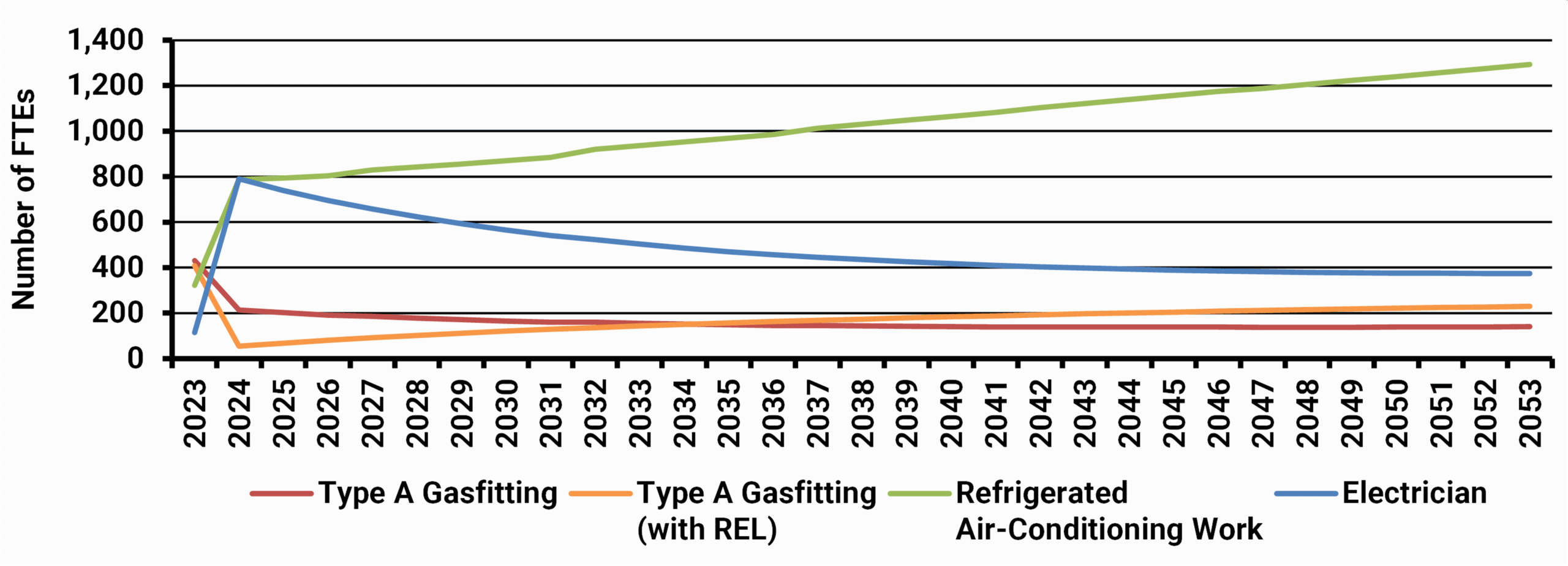
One of the Australian state governments was considering policy options to achieve faster gas system decarbonization. following charts show Energeia’s analysis of the number of Full-time Equivalent (FTE) personnel required under different policy options related to electrifying appliances.
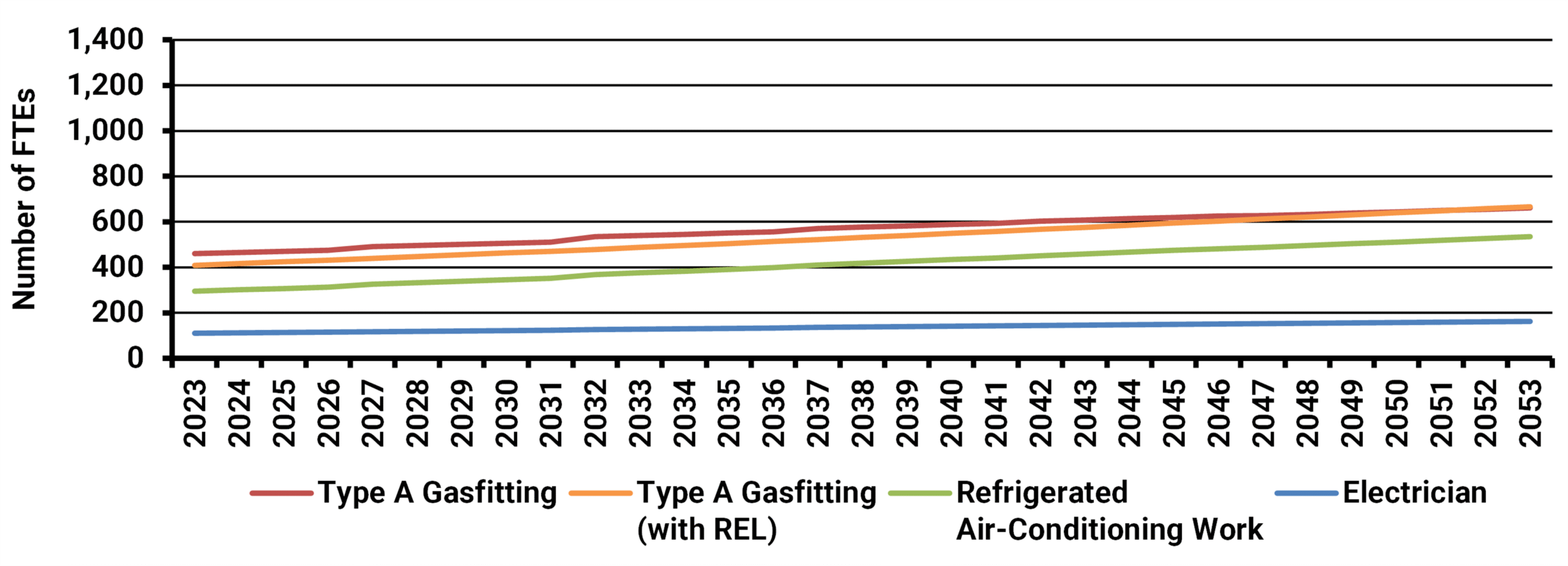
The analysis considered the impact of banning gas connections in new premises, and/or banning the sale of new gas appliances, for existing appliances at the end of their life. The modeling showed that bans would have significant impacts on trade jobs, with Figure 2 showing the business-as-usual outcome, and Figures 3 and 4 showing the policy options gas connection ban and gas appliance ban, respectively.
The results of the scenario analysis above show that each policy option results in a large increase in electric-related work hours and a decrease in gas-related work hours. Both the gas connection ban and appliance ban scenarios result in changes to workforce needs.
A key recommendation was to set bans far enough in the future to allow the market to adjust as well as stagger bans. For example, start with residential water heaters, followed by space heaters, then commercial water heaters, then space heaters, and so on.
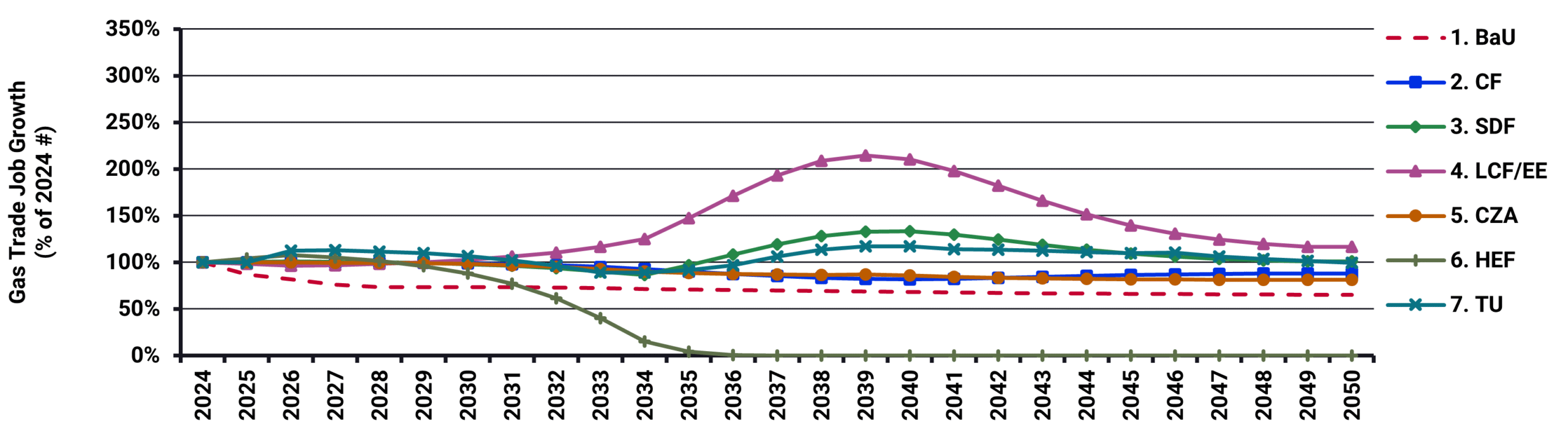
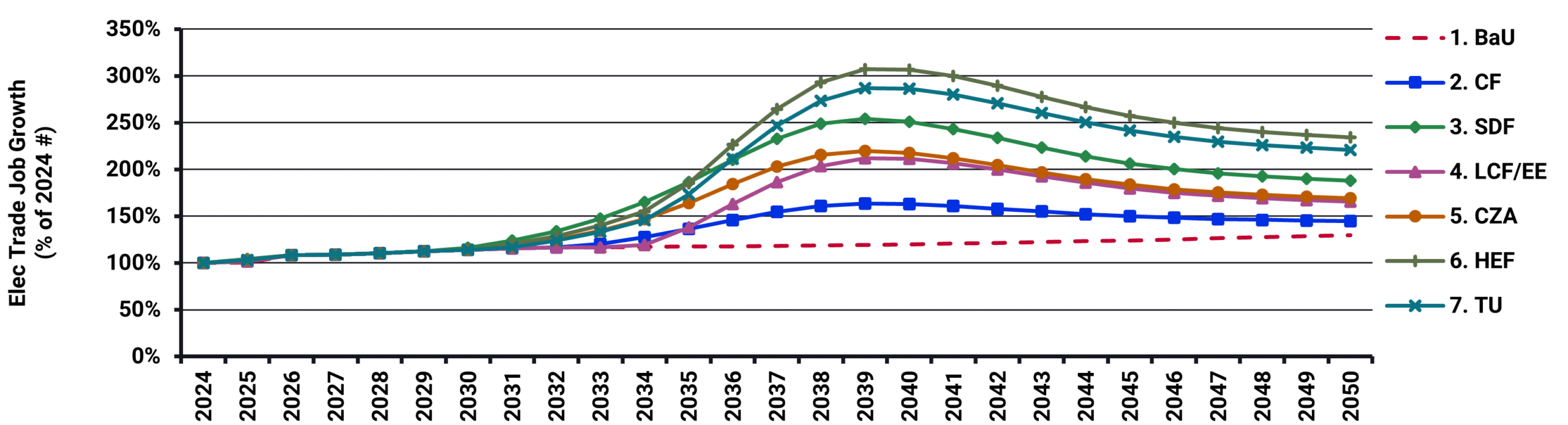
A US state was considering a wide range of options to decarbonize its gas sector, and not just electrification. The following charts show Energeia’s analysis of the number of FTEs required for different gas system pathway options.
Energeia modeled the impact of each pathway on sector utility and trade jobs. The impacts were mainly estimated using throughput and installation labor estimates. The analysis highlights the significant differences in potential impact depending on the pathway chosen.
The above analysis highlights the high level of variation of skilled labor requirements across different sectors due to policy decisions and the importance of considering potential workforce shortages on policy implementation.
Electricity utilities are also impacted by the increasing decarbonization of consumer end uses and the grid transitions.
The following analysis was developed through an engagement with a US utility that is aiming for 100% renewable energy in the next 10 years. Energeia developed workforce estimates from strategic plans, human resources and finance datasets. The project identified the workforce needs vs. supply gap based on current recruitment and training capacity, and developed a strategy for addressing them.
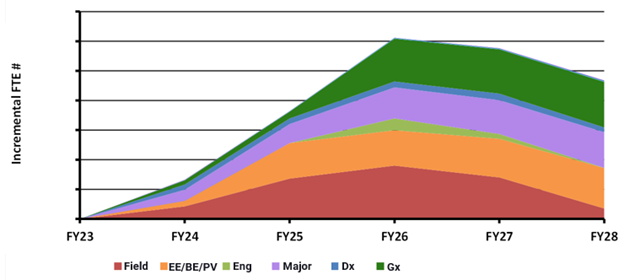
Future FTEs by class were estimated over time, based on planned investments in the distribution, transmission, generation and BTM program capacity and capabilities. Figure 7 below reports on the forecast change in the number of employees needed for the utility.
Moving to a 100% renewable grid is likely to involve a more decentralized system, requiring a large shift in focus and reallocation of spending and workforce composition. Key recommendations from this work included the need to enhance their understanding of:
The government of the Australian Capital Territory (ACT) was considering methods of shutting down the gas network over time, as well as different policy options that would assist in transitioning people off gas.
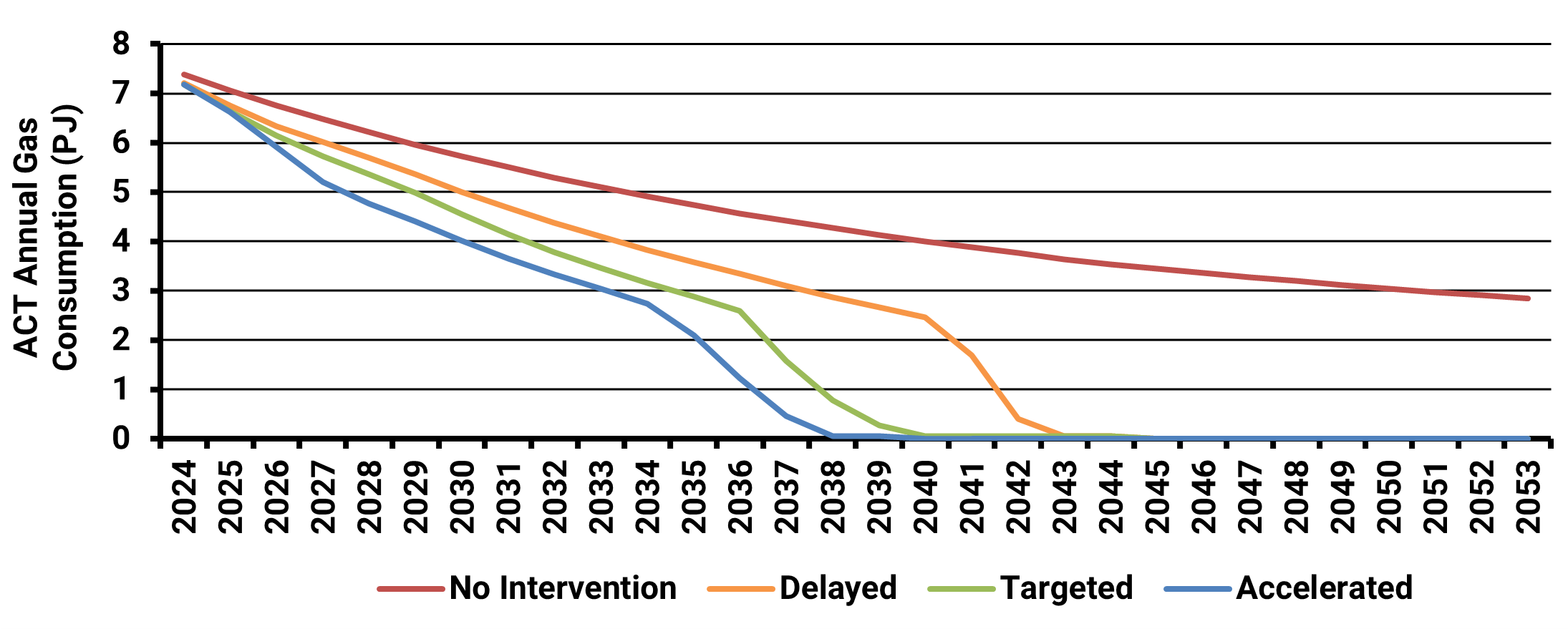
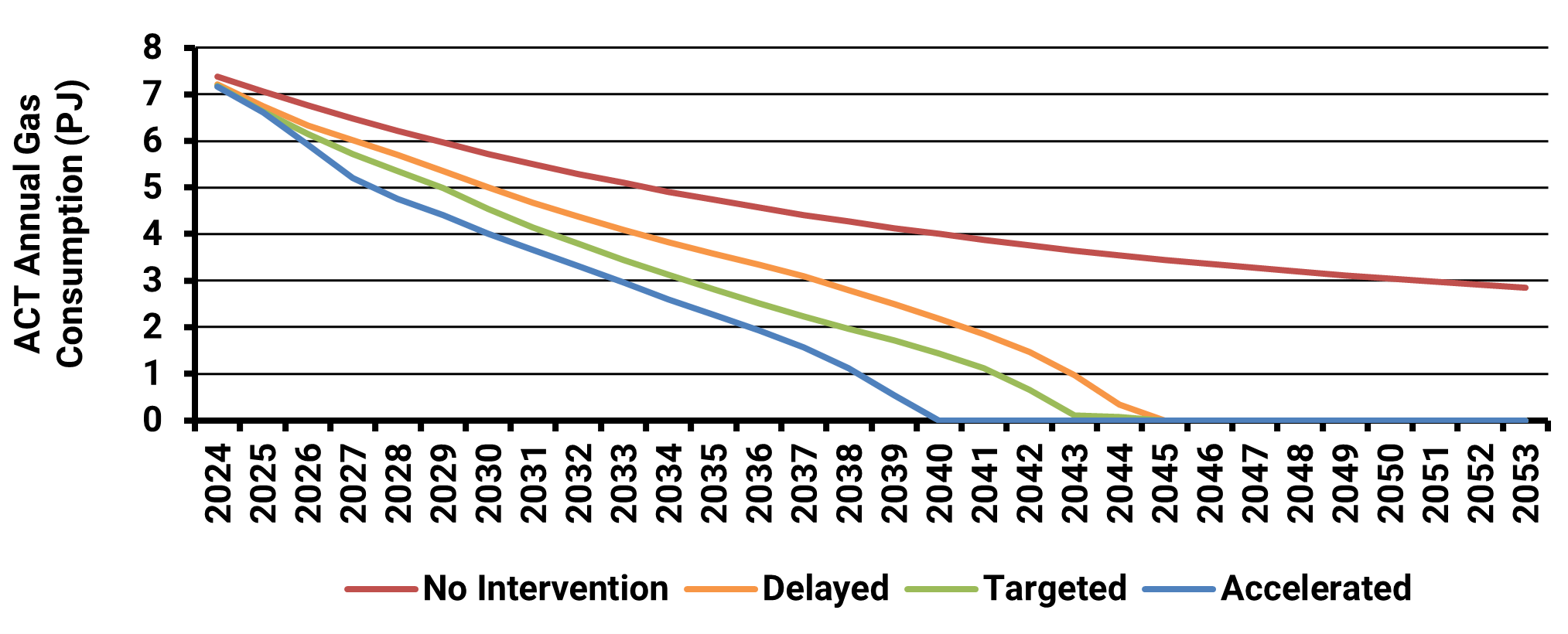
Figures 8 and 9 below show two different methods for shutting down the gas network. The first is to shut down portions of the gas network once consumption has fallen below a certain threshold, and the second is to shut down an equal portion each year. The modeling outcomes below show that different decommissioning strategies would have very different impacts on demand for gas and electricity.
The two methods, which are achieving similar outcomes, have very different gas and electric sector workforce impacts. The difference in these two graphics shows the importance of considering the impacts of policies on skilled labor requirements.
Key recommendations from the work included banning new appliances as soon as possible to avoid future asset-stranding costs, pushing out decommissioning as far as possible to minimize stranding of existing assets, and managing price increases to avoid uneconomic switching over time.
Workforce impact analysis was not in scope, but the difference in network shutdowns by scenario shows the potential for rapid change in utility and trade jobs between the gas and electric systems.
Energeia’s detailed report can be found here.
Listen or click through at your own pace
The following section outlines key dynamics in the current US workforce, including current trends, challenges and solutions for meeting the required increase in the workforce.
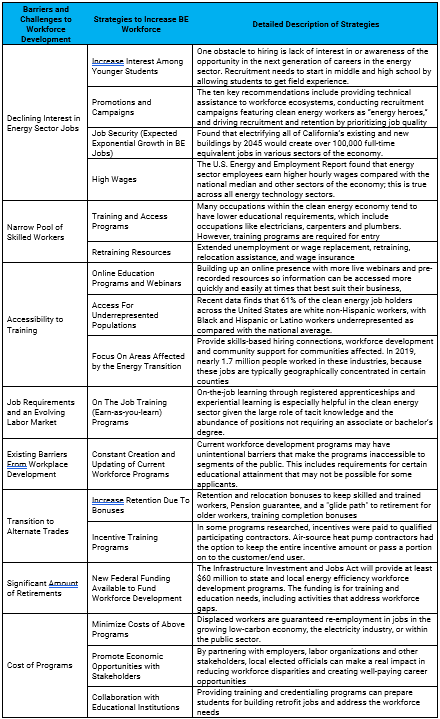
Energeia has summarised the key workforce barriers below, which were determined from both contractor interviews and research. Interviewees cited barriers such as the competitiveness of wages, blue-collar job stigma, retraining incentive availability and uncertainty around demand for green jobs.
Table 1 below summarizes the identified barriers, which include a decline in energy job interest, a small pool of workers, a lack of training access, and high entry requirements.
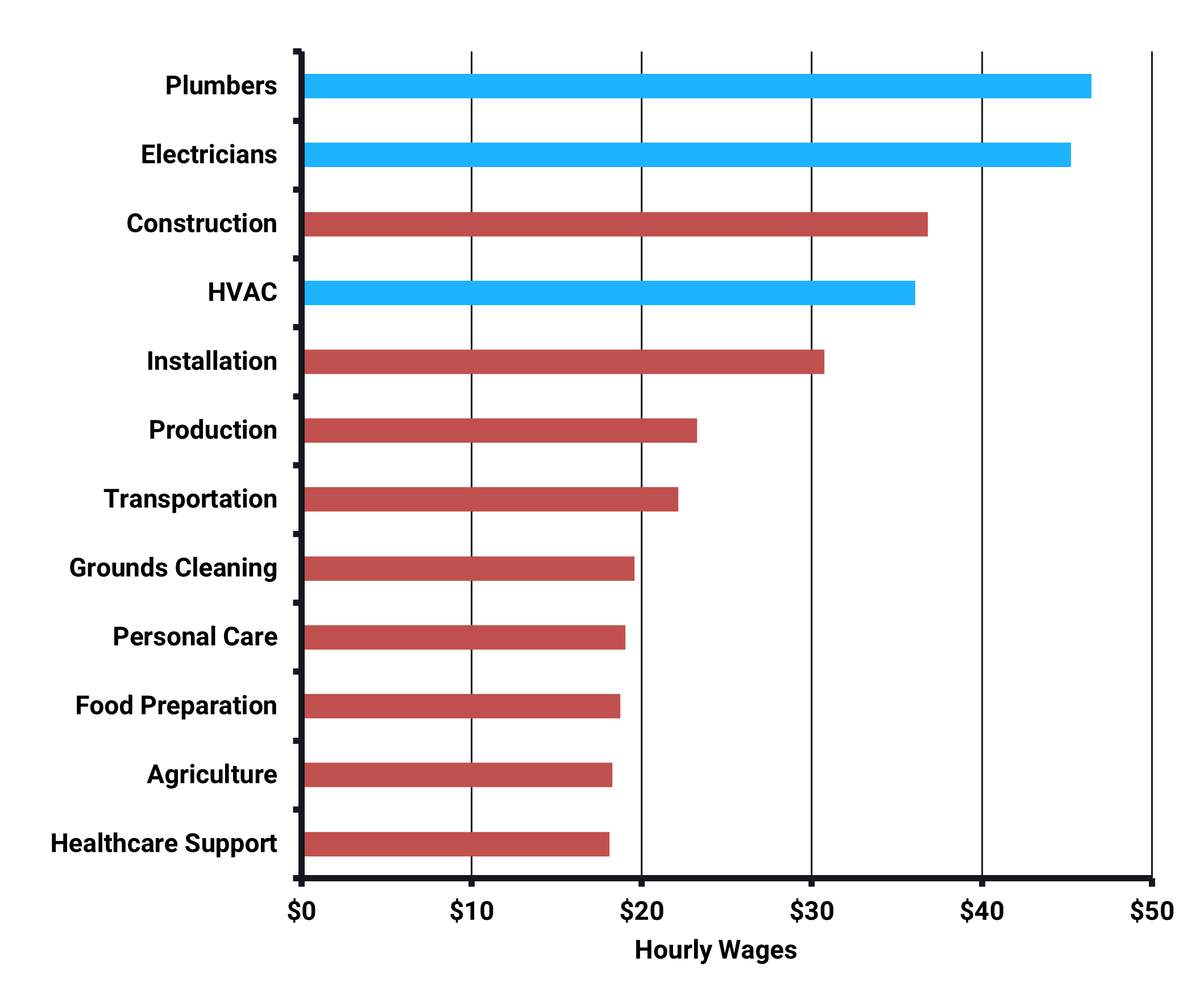
Energeia analyzed hourly wages for blue-collar jobs and compared them to the hourly wages of the contractors who install building electrification appliances. The findings showed that plumbers, electricians, and HVAC professionals all make significantly more than most non-BE blue-collar jobs in this example.
As shown in Figure 10, the only non-building electrification blue-collar job that makes more than contractors related to building electrification technologies is construction, which makes ~$1 more per hour than HVAC professionals. The key takeaway here is that plumbers, electricians, and HVAC professionals have competitive salaries when compared to other trade jobs.
The following table summarizes the challenges and associated strategies to overcome these challenges in the electrification workforce, based on Energeia research.
On the basis of the above challenges and solutions, Energeia developed a targeted workforce strategy for a Community Choice Aggregator (CCA) that addressed key workforce needs and barriers. Table 3 below captures the estimated costs and workforce impacts of selected key solutions from one of our recent engagements in California.
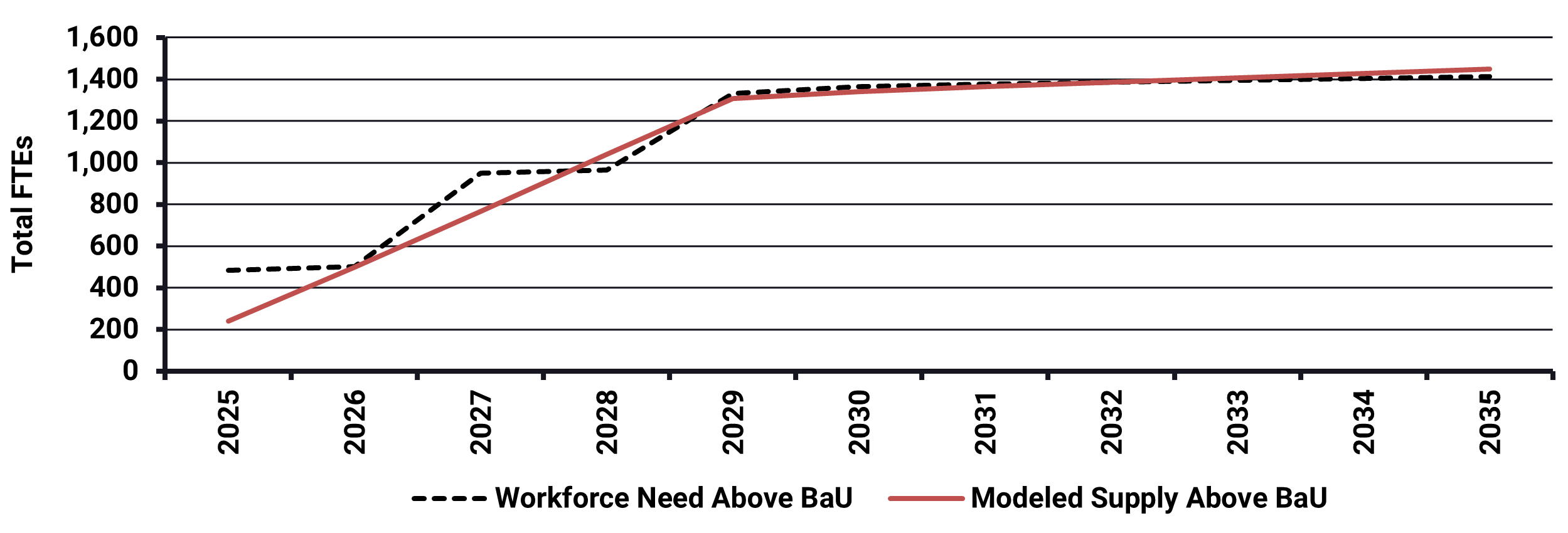
The resulting, illustrative workforce development program impacts are shown in Figure 8. They include strategies for increasing the efficiency of the existing workforce, e.g., instant permits and streamlining. In this case, the plan was smoothed to reflect the realities of hiring and program implementation (ideally, it should ramp up). The resulting, illustrative workforce transition forecast is shown below against the target needed to hit the identified building electrification goals.
Energeia recommended revisiting workforce development plans each year to validate assumptions and to refine programs as required.
Energeia’s key takeaways and recommendations for tackling the skills gap in the workforce and implementing decarbonization are summarized below.
Key Takeaways:
Key Recommendations:

Explore the future of U.S. nuclear energy and how shifting policies, next-generation technologies like SMRs and microreactors, and global competitiveness are shaping the nuclear landscape.

Explore how Virtual Power Plants (VPPs) and Home Energy Management Systems (HEMS) are transforming energy systems. Learn why they’re critical to managing rising demand, cutting

Energeia was engaged by Moreno Valley Utility (MVU) to develop their 2023-25 Integrated Resource Plan (IRP). As part of this process, Energeia will be analyzing